
The Chinese Physiological Society (CPS) was founded in 1926. The aim of CPS is to promote education and research in the physiological sciences by providing educational activities, scientific meeting and by actively joining the national and international scientific communities. The society publishes one journal, the Journal of Physiological Investigation (JPI), bimonthly per year in English.
History
Establishment of Chinese Physiological Society after World War I
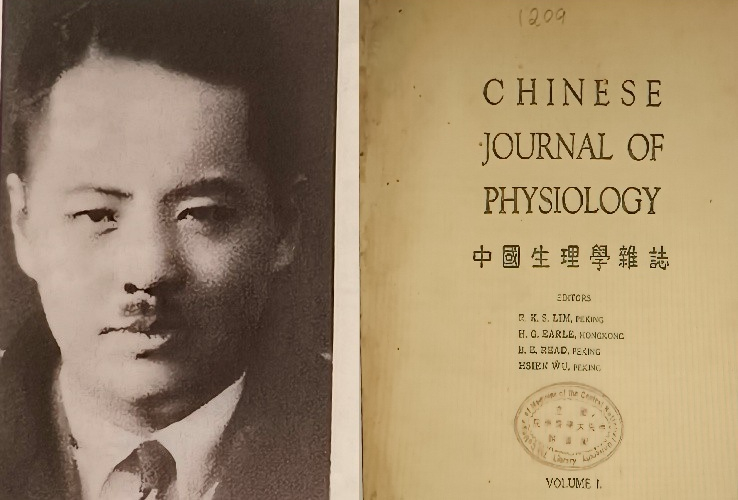
In 1926, Robert Kho-Seng Lim (Robert KS Lim, 林可勝), with the support of Hsien Wu launched the Chinese Physiological Society in the Peking Union Medical College (PUMC). He invited seven well-known physiologists as honorary members of the Society to further facilitate scientific exchange. The establishment of Chinese Physiological Society provided an interactive platform to build strong connections with world-class elites, including J. J. Abeland and A. J. Carlson in the USA, E. Abderhalden in Germany, J. Bacroft, F. G. Hopkins, and E.S. Schafer in the U.K., and I.P. Pavlov in Russia.
To connect the Chinese Physiological Society with the world through science communication, he established the Chinese Journal of Physiology in 1927. This is the first scientific journal, published in English. Because of his unique decision in language use, the Journal quickly established itself as a leading journal for such work in Asia. Many papers that were first published in the Journal went on to be cited by various textbooks at that time, including Human Physiology (edited by Houssay in Argentina), the Handbook of Physiology (Sec. I, Vol. II), the Physiological Basis of Medical Practice (edited by Best and Taylor in Canada), Principles of Human Physiology (edited by Starling in the U.K.), and Lehrbuch der Physiologie des Menschen (edited by Landois-Rosemann in Germany).
Transformation of the Chinese Physiological Society after World War II
In 1941, because of the outbreak of Pacific War II in Mainland China, the foreign faculties at PUMC either moved back to their hometown or relocated to other regions with Chinese scholars and trainees. Some medical schools were reconstructed in southern China. Therefore, the Chinese Journal of Physiology temporally cease publication. In 1949, the Nationalist government retreated to Taiwan. In 1959, when National Scientific Council was founded in Taiwan, Ann-Cheng Liu (柳安昌), the head of Physiology at the National Defense Medical Center (NDMC), proposed a re-launch of the Chinese Physiological Society in Taiwan to meet the research and teaching needs of physiologists.
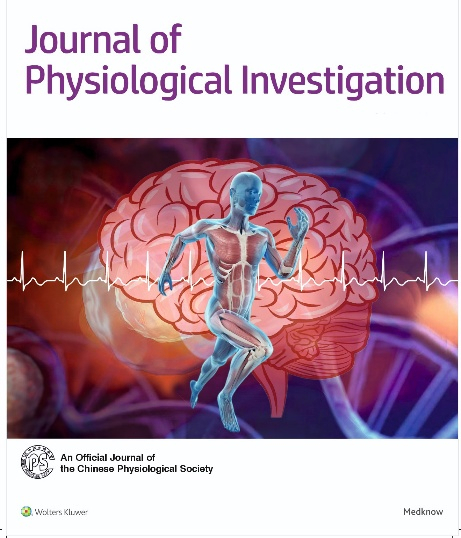
After the relaunch of the society, the presidents of the Chinese Physiological Society have undertaken tremendous efforts to maintain the integrity of the journal. To date, the presidents have been as follows: A. C. Liu (柳安昌) from 1959-70, H. S. Fang (方懷時) from 1970-73, C. Y. Chai (蔡作雍) from 1973-77, H. H. Lu (盧信祥) from 1977-81, S. T. Chiang from 1981-84, M. T. Peng from 1984-87, M. T. Lin (林茂村) from 1987-90, T. K. Young (楊志剛) from 1990-94, H. I. Chen (陳幸一) from 1994-96, P. S. Wang (王錫崗) from 1996-2000, T. H. Chiu (邱蔡賢) from 2000-02, Eminy H. Y. Lee (李小媛) from 2002-04, Y. T. Lau (樓迎統) from 2004-08, Julie H. Y. Chan (華瑜) from 2008-12, P. S. Hsieh (謝博軒) from 2012-16, S. J. Tsai (蔡少正) from 2016-20, Y. H. Lee (李怡萱) from 2020-22, J. C. Chen(陳景宗) from 2022-24 and K. Z. Lee (李昆澤) from 2024-2026. In addition, the editor-in-chiefs of the Journal over the past few years have worked hard to improve the quality and promote its international standing, including A. C. Liu (柳安昌), C. Y. Chai (蔡作雍), S. T. Chiang (姜壽德), T. H. Chiu (邱蔡賢), T. C. Fu (傅祖慶), Shirley P. H. Li (李碧雪), P. S. Wang (王錫崗), Eminy H. Y. Lee (李小媛), P. S. Hsieh (謝博軒) and S. J. Tsai (蔡少正). As documented above, the visionaries who founded Chinese Physiological Society realized that physiology was an emerging field with broad applications. Recent development in new approaches, including molecular and cellular tools, has been widely utilized in physiological studies. In addition, rapid development of bioinformatic analysis and large-scale analysis of genomes and proteomes provides new ways of exploring a new field of systems biology to our future physiologists. In response to changes in the international situation and journal publication practices, the Chinese Journal of Physiology initiated a rename at the end of 2022. Under the supervision of the journal’s executive committee and driven by the renaming committee, the board of directors voted to change the English name of the journal to the Journal of Physiological Investigation (JPI). Former president S. J. Tsai (蔡少正) was appointed as the inaugural editor-in-chief of the new journal, which published its first issue in the first quarter of 2024.
Since it has been recognized that by becoming cognizant of the history and impact of critical technology and knowledge individuals will be able to make better use of such things, it is necessary to understand how the subject of physiology has evolved and how we can best determine the next step in the related studies. Therefore, it is hoped that this special issue may function as a bridge to connect physiologists in Taiwan with those in the wider world, and provide better communication in the field to enable new developments in Physiology and aid professional networking.
Journal of Physiological Investigation
The Journal of Physiological Investigation (JPI), renamed from the Chinese Journal of Physiology (CJP), is a peer-reviewed open-access journal of the Chinese Physiological Society in Taiwan. It publishes peer-reviewed original research papers on a bimonthly basis and covers a broad aspect of physiology. Our mission is to provide a platform for articles with merit to the academic communities. To this end, we make efforts to ensure the review and publication processes of each paper run efficiently and each publication in good quality has sufficient exposure to readers.
Journal website: https://journals.lww.com/jpi/pages/default.aspx
100th anniversary of the Chinese Physiological Society, Taiwan
The Chinese Physiological Society (CPS) Taipei celebrated its 100 anniversary at the 40th Joint Annual Conference of Biomedical Science in Taipei. The presidents of FAOPS, Gary Housley and IUPS President Yoshihiro Kubo gave congratulatory addresses and special lectures. IUPS congratulates CPS on this successful meeting and, in particular, on this important anniversary marking a century of physiological research and education.
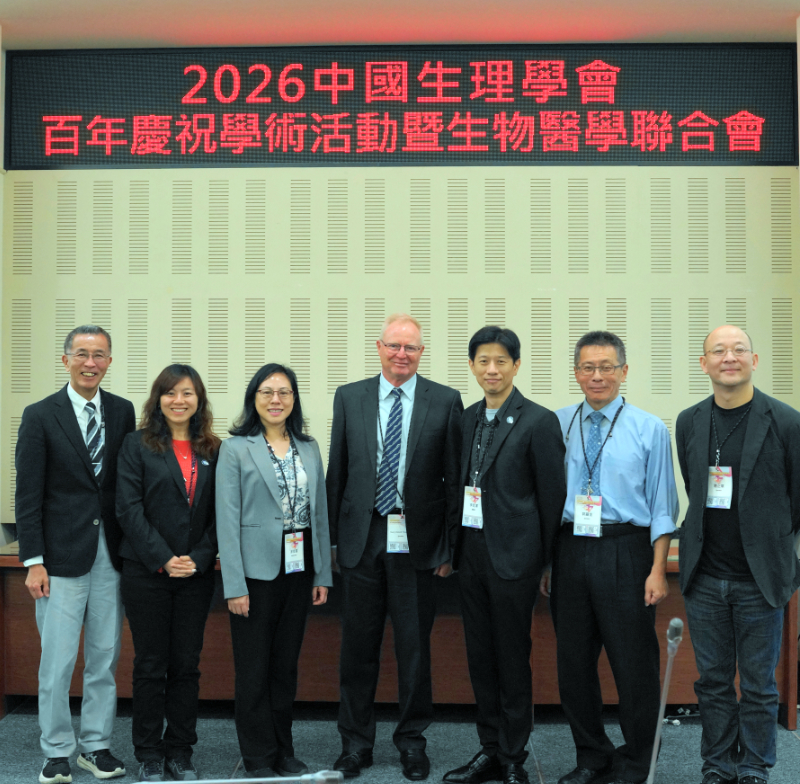
The photo depicts the presidents of IUPS, FAOPS and CPS together with special lecturers and council members of CPS.
From left to right: IUPS President Yoshihiro Kubo, CPS Secretary-General Ya-Tin Lin, CPS Executive Board Member Linda Chia-Hui Yu, FAOPS President Gary Housley, CPS President Kun-Ze Lee, Special Lecturer Chung-Chin Kuo, and CPS Executive Board Member Cheng-Chang Lien
.